

John Roberts, writer and author, RIP
The former journalist had a long career in the heyday of Fleet Street, from covering Manchester United when they were glorious to decades as a tennis correspondent

The closest I ever had to a mentor in journalism was John Roberts, who wrote for the Daily Express (when it was a great newspaper), The Guardian, the Daily Mail and The Independent, where he was the tennis correspondent for 20 years.
I had a call from John's wife Phyllis this morning to let me know he died yesterday. There will be many people in the worlds of football, and tennis, who will be sorry to hear this news.
John worked with Bill Shankly on the Liverpool manager’s autobiography, ghosted Kevin Keegan’s first book, and has written books on George Best (‘Sod this, I’m off to Marbella’), Manchester United’s Busby Babes (The Team That Wouldn’t Die) and Everton (The Official Centenary History).
John was George Best's ghost writer when Best was just past his best. Below is a photo of John, George and Phyllis, from an era when John would go to George’s house each week to work on George’s column for The Express, always wondering whether George was yet home from his latest night out, or whether he was in bed, and if so, who with.
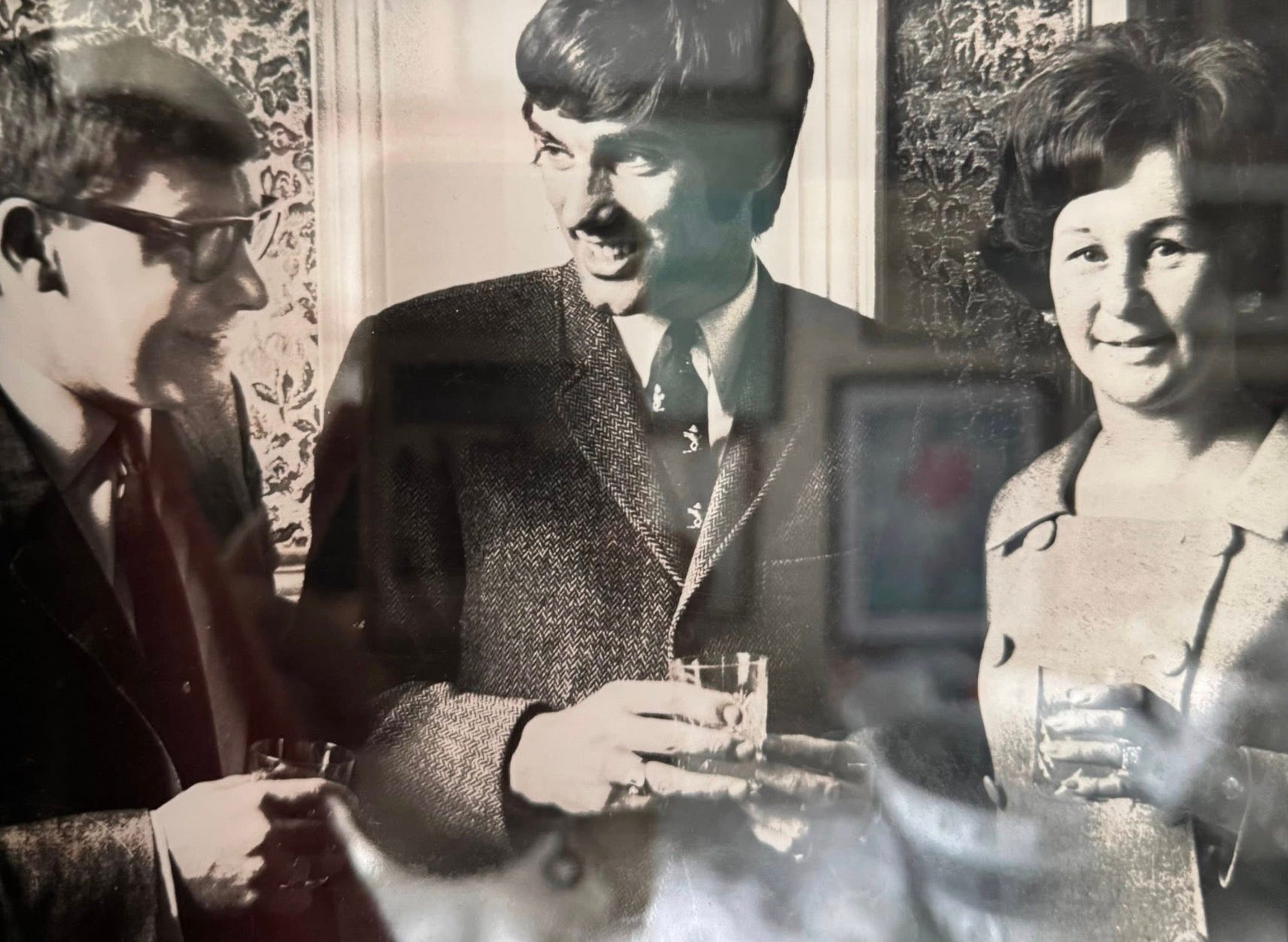
John worked in newspapers in their heyday. He was a brilliant, meticulous writer, refusing to file a piece containing an imperfect sentence. Which is why we called him the late John Roberts decades ago.
As Matthew Engel once wrote in the British Journalism Review: “I suspect posh-paper sports writing changed forever the day John left The Express to join The Guardian in the late 1970s, was handed a piece of agency copy and picked up a telephone to start asking questions.”
I could write thousands of words about John and his life and work, but I’ll keep this short. Most of my days working alongside John were when he was The Independent’s tennis correspondent from the late 1990s to the early Noughties.
We would spend 17 days together, from the Saturday before the tournament began to the Monday after it ended each year. We’d sit beside each other, all day every day, from 9am until late most nights, either in the press room or the press seats of various courts. And then almost every night we’d go out to eat, late.
John was a creature of habit and we’d often eat in the same few places, either in East Sheen, or in Richmond near the same hotel where he stayed every year. As I was discussing with Phyllis this morning, John would invariably order dover sole, off the bone, with chips and salad, bread and butter, and a cup of tea. If he really wanted to throw off the shackles, he would occasionally have a glass of white wine.
When I started Sporting Intelligence in 2010, John had retired from national newspapers and agreed to write regular columns for me, and they were consistently brilliant. I won’t repeat all of them here, but there’s an archive you can access here.
At random, I will recap just four of those columns, to give you a taste of his work. This one is about Dixie Dean, who John interviewed extensively, and includes a great anecdote about Babe Ruth.
This one is about George Best, who John first met during his time as the Daily Express’s sports correspondent in Northern Ireland from 1965 to 1968; John later played a part in arranging a civic reception in his honour at Belfast City Hall after Manchester United won the European Cup and George was named European Footballer of the Year.
This one is about Alex Ferguson and Brian Clough, at least in part. Just read it!
And this one is about the day that John went to interview James Thain, the pilot of the plane on the day of the Munich air disaster. John did that interview in 1974 about the 1958 tragedy, for his book ‘The Team That Wouldn’t Die’. first published in 1975.
I still find the story behind the story of that interview one of the most moving and haunting stories that John ever told me about his life as a journalist and writer - going to Thain’s house with a bottle of whisky and talking about 1958 until late.
“There had been no reason to switch on a light as we began talking, and we became so engrossed that the room was almost in darkness before Thain finished reliving the crash and the ordeal of the fight to clear his name,” wrote John in that piece.
It is an extraordinary piece of writing, detailing how it took multiple inquiries and 10 years for Thain to be cleared of blame.
It includes this passage. “The first inquiry, in West Germany, decided that the crash was caused by ice on the wings of the aircraft, which resulted in Thain being blamed because that was his responsibility.
“Thain was dissatisfied with the way this inquiry was conducted and disagreed with its findings. He believed the crash was caused by slush on the runway and fought on until this was finally accepted.
“He told me that after the first inquiry British European Airways sent him an invoice for the cost of his airline cap, which had been lost in the wreckage.”
RIP JR.
What a wonderful tribute to JR, who we all adored. Thank you Nick